Monday, November 1, 2010

Barry White

Barry Eugene White (September 12, 1944 – July 4, 2003) was an American record producer and singer-songwriter.
A five-time Grammy Award-winner known for his distinctive bass voice and romantic image, White's greatest success came in the 1970s as a solo singer and with the Love Unlimited Orchestra, crafting many enduring soul, funk, and disco songs such as his two biggest hits, "You're the First, the Last, My Everything" and "Can't Get Enough of Your Love, Babe". Worldwide, White had many gold and platinum albums and singles, with combined sales of over 100 million, according to critics Ed Hogan and Wade Kergan.

White was born Barrence Eugene Carter in Galveston, Texas and grew up in the high-crime areas of South Central Los Angeles. White was the eldest of two brothers. His younger brother Darryl was born 13 months apart from him. As a child, White grew up listening to his mother's classical music collection. White first took to the piano emulating what he heard on the records. White's introduction to music later led to him playing piano on Jesse Belvin's hit single, "Goodnight My Love". During his teenage years, Barry and his brother got involved with crime and gang activity. At age 17, he was jailed for four months for stealing $30,000 worth of Cadillac tires.

While in jail, White listened to Elvis Presley singing "It's Now or Never" on the radio, an experience he later credited with changing the course of his life. After his release, he left gang life and began a musical career at the dawn of the 1960s in singing groups before going out on his own in the middle of the decade.
The marginal success he had to that point was as a songwriter. His songs were recorded by rock singer Bobby Fuller and TV bubblegum act The Banana Splits. He was also responsible in 1963 for arranging "Harlem Shuffle" for Bob & Earl, which became a hit in the UK in 1969. He discovered disco artists, Viola Wills and Felice Taylor in 1965 and signed them to Mustang/Bronco Records, for which he was working as A&R manager.

Saturday, October 30, 2010

Eric Clapton

Eric Patrick Clapton, CBE (born 30 March 1945) is an English blues-rock guitarist and singer-songwriter. Clapton is the only person who has been inducted into the Rock and Roll Hall of Fame three times; as a solo performer, as well as a member of rock bands The Yardbirds and Cream. Throughout his career, Clapton has been viewed by critics and fans alike as one of the most important and influential guitarists of all time, Clapton was ranked fourth in Rolling Stone magazine's list of the "100 Greatest Guitarists of All Time" and #53 on their list of the "Immortals: 100 Greatest Artists of All Time". In 2010, Clapton was ranked #4 on Gibson's Top 50 Guitarists of All Time.

Although Clapton has varied his musical style throughout his career, it has always remained grounded in the blues; despite this focus, he is credited as an innovator in a wide variety of genres. These include blues-rock (with John Mayall & the Bluesbreakers and The Yardbirds) and psychedelic rock (with Cream). Clapton's chart success was not limited to the blues, with chart-toppers in Adult contemporary ("Tears in Heaven") and reggae (Bob Marley's "I Shot the Sheriff"; he is often credited for bringing reggae and Bob Marley to the mainstream).

Two of his most successful recordings were the hit love song "Layla", which he played with the band Derek and the Dominos, and Robert Johnson's "Crossroads", which has been his staple song since his days with Cream.

Thursday, October 28, 2010

The Byrds

The Byrds were an American rock band, formed in Los Angeles, California in 1964. The band underwent multiple line-up changes throughout its existence, with frontman Roger McGuinn (aka Jim McGuinn) remaining the sole consistent member until the group disbanded in 1973. Although they only managed to attain the huge commercial success of contemporaries like The Beatles, The Beach Boys, and The Rolling Stones for a short period of time (1965–66), The Byrds are today considered by critics to be one of the most influential bands of the 1960s. Initially, they pioneered the musical genre of folk rock, melding the influence of The Beatles and other British Invasion bands with contemporary and traditional folk music. As the 1960s progressed, the band were also influential in originating psychedelic rock, raga rock, and country rock. In addition, the band's signature blend of clear harmony singing and McGuinn's jangly twelve-string Rickenbacker guitar has continued to be influential on popular music up to the present day. Among the band's most enduring songs are their cover versions of Bob Dylan's "Mr. Tambourine Man" and Pete Seeger's "Turn! Turn! Turn!", along with the self-penned originals, "I'll Feel a Whole Lot Better", "Eight Miles High", "So You Want to Be a Rock 'n' Roll Star", "Ballad of Easy Rider" and "Chestnut Mare".

The original five-piece line-up of The Byrds consisted of Jim McGuinn (lead guitar, vocals), Gene Clark (tambourine, vocals), David Crosby (rhythm guitar, vocals), Chris Hillman (bass guitar, vocals), and Michael Clarke (drums). However, this version of the band was relatively short-lived and by early 1966, Clark had left due to problems associated with anxiety and his increasing isolation within the group. The Byrds continued as a quartet until late 1967, when Crosby and Clarke also departed the band. McGuinn and Hillman decided to recruit new members, including country rock pioneer Gram Parsons, but by late 1968, Hillman and Parsons had also exited the band. McGuinn, who by this time had changed his name to Roger after a flirtation with the Subud religion, elected to rebuild the band's membership and between 1968 and 1973, he helmed a new incarnation of The Byrds, featuring guitarist Clarence White among others. McGuinn disbanded the then current line-up in early 1973, to make way for a reunion of the original quintet. The Byrds' final album was released in March 1973, with the reunited group disbanding soon afterwards.

Several ex-members of the band went on to have successful careers of their own, either as solo artists or as part of groups, such as Crosby, Stills, Nash & Young or The Desert Rose Band. In the late 1980s, Gene Clark and Michael Clarke both began touring as The Byrds, prompting a legal challenge from McGuinn, Crosby, and Hillman over the rights to the band's name. As a result of this, McGuinn, Crosby, and Hillman performed a series of reunion concerts as The Byrds between 1988 and 1990, and also recorded four new Byrds' songs. On January 16, 1991, The Byrds were inducted into the Rock and Roll Hall of Fame, an occasion that saw the five original members performing together for the last time. McGuinn, Crosby, and Hillman still remain active but Gene Clark died of a heart attack in 1991, and Michael Clarke died of liver failure in 1993.

Wednesday, October 27, 2010

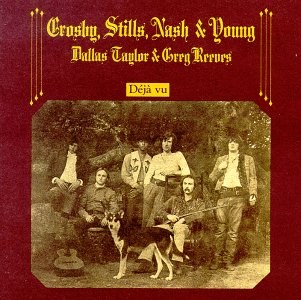
Crosby, Stills, Nash & Young

Crosby, Stills & Nash (CSN) is a folk rock supergroup made up of David Crosby, Stephen Stills and Graham Nash, also known as Crosby, Stills, Nash & Young (CSNY) when joined by occasional fourth member Neil Young. They are noted for their intricate vocal harmonies, often tumultuous interpersonal relationships, political activism, and lasting influence on music and culture. All four members of CSNY have been inducted into the Rock and Roll Hall of Fame twice, though Young's multiple inductions were for work not involving the group.

CSNY's music unerringly reflected the tastes and viewpoints of the counterculture as the calendar rolled over from the sixties to the seventies. By 1970, with protest against both the establishment and the Vietnam War gearing up, the group made no secret of their political leanings, Crosby in particular.
The release of "Ohio" following the Kent State shootings in 1970 marked the boldest musical statement made to that date regarding the Vietnam War, calling out Richard Nixon by name and voicing the counterculture's rage and despair at the events. Between "Ohio", their appearance in both the festival and movie of Woodstock, and the runaway success of their two albums, the group found themselves in the position of enjoying a level of adulation far greater than experienced with their previous bands, as evidenced by the 27 Platinum certifications they received across 7 albums.
The collective talents allowed the band to straddle all the flavors of popular music eminent at the time, from country-rock to confessional balladry, from acoustic guitars and voice to electric guitar and boogie. Indeed, with the Beatles break-up made public by April 1970, and with Bob Dylan in reclusive low-key activity since mid-1966, CSNY found itself as the adopted standard bearers for the Woodstock Nation, vouchsafing an importance in society as counterculture figureheads equaled at the time in rock and roll only by The Rolling Stones. CSNY was originally commissioned to create the soundtrack for Easy Rider,[citation needed] but Stills' offering, "Find the Cost of Freedom" was rejected.


An entire sub-industry of singer-songwriters in California either had their careers boosted or came to prominence in the wake of CSNY, among them Laura Nyro, Joni Mitchell, Jackson Browne, and The Eagles. All were managed, incidentally, by Roberts, and all but Nyro signed to Geffen’s Asylum label, which would be the home for what came to be known as the Mellow Mafia for the remainder of the decade.
The band has continued to be associated with political causes throughout its existence.

Tuesday, October 26, 2010

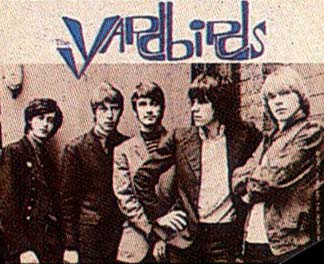
Yardbirds

The Yardbirds are an English rock band that had a string of hits in the mid 1960s, including "For Your Love", "Over Under Sideways Down" and "Heart Full of Soul". The group is notable for having started the careers of three of rock's most famous guitarists: Eric Clapton, Jeff Beck, and Jimmy Page, all of whom were in the top fifteen of Rolling Stone's 100 Top Guitarists list (Clapton as #4, Page as #9, and Beck as #14).

A blues-based band that broadened its range into pop and rock, The Yardbirds were pioneers in the guitar innovation of the '60s: fuzz tone, feedback, distortion, backwards echo, improved amplification, etc. Pat Pemberton, writing for Spinner, holds that the Yardbirds were "the most impressive guitar band in rock music". After the Yardbirds broke up in 1968, their current lead guitarist Jimmy Page founded what became Led Zeppelin.
The bulk of the band's most successful self-written songs came from bassist/producer Paul Samwell-Smith who, with singer/harmonica player Keith Relf, drummer Jim McCarty and rhythm guitarist/bassist Chris Dreja, constituted the core of the group. The band reformed in the 1990s, featuring McCarty, Dreja and new members. The Yardbirds were inducted into the Rock and Roll Hall of Fame in 1992.

Monday, October 25, 2010

Gipsy Kings

Gipsy Kings is a group of musicians from Arles and Montpellier, France who perform in Gitane, a dialect of Spanish that is heavily influenced by French and Catalan. Although group members were born in France, their parents were mostly gitanos, Spanish Romani people who fled Catalonia during the 1930s Spanish Civil War, with the exception of Chico Bouchikhi who is of Moroccan and Algerian descent.

They are known for bringing Rumba Catalana, a pop-oriented music distantly derived from traditional flamenco music, to worldwide audiences. Their music has a particular Rumba Flamenca style, with pop influences; many songs of the Gipsy Kings fit social dances, such as Salsa and Rumba.

Their music has been described as a place where "Spanish flamenco and Romani rhapsody meet salsa funk".

Sunday, October 24, 2010

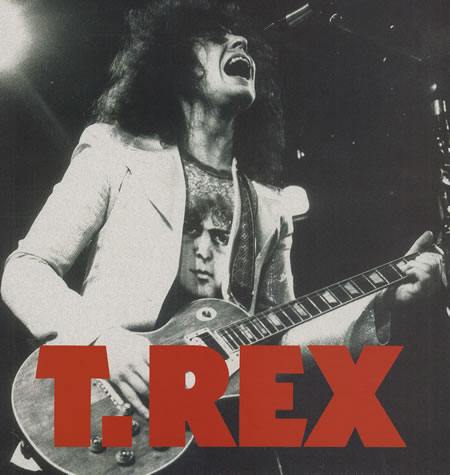
T. Rex

T. Rex were an English rock band fronted by guitarist, singer and songwriter Marc Bolan. Formed as Tyrannosaurus Rex in 1960s London, the folk rock group's debut album My People Were Fair and Had Sky in Their Hair... But Now They're Content to Wear Stars on Their Brows (1968) reached number 15 in the UK.

In the 1970s, they achieved mainstream success as a glam rock band with the hits "Get It On", "Ride a White Swan", "Cosmic Dancer", "20th Century Boy", "Children of the Revolution", "Hot Love", "Telegram Sam" and "Metal Guru". After waning commercial success in the mid-70s, T. Rex ended in 1977 after Bolan was killed in a car accident.